Replace IVR with Voice AI to Rebuild Customer Loyalty
Blog
Read More
The restaurant game certainly has changed over the past decade. Staffing shortages, increasing competition, rising costs and new customer expectations are redefining what it means to run a successful restaurant.
The days of relying solely on paper schedules, manual reservation logs and hectic host stands are fading. In their place, artificial intelligence (AI) is reshaping how restaurateurs operate, serve and grow.
AI for restaurants isn’t about replacing people. The focus is on freeing your people to do what they do best: create memorable customer experiences. AI tools now help restaurants automatically and intelligently answer phones, take reservations, optimize prep lists, manage schedules and personalize marketing. They operate in the background, acting as digital team members that never sleep, make fewer mistakes and keep your systems connected.
The timing couldn’t be better:
This guide explores everything you need to know about restaurant AI, including how to use it, where to start and how it’s transforming operations, marketing, staffing and guest experience across the industry.
AI for restaurants is software designed to observe, decide and act within defined parameters. Think of it as a virtual employee who understands your restaurant’s rules, context and goals and then takes intelligent action, whether that’s answering the phone, sending a reservation reminder, predicting tomorrow’s prep list or replying to a review.
These AI agents use machine learning algorithms and natural language processing (NLP) to understand and respond to customer inquiries, including common and complex ones. As an AI tool, they are designed to mimic human behavior in their interactions, allowing them to provide accurate responses to customer questions and deliver a seamless experience.
Unlike a simple chatbot, which reacts to prompts, an AI agent operates autonomously. It connects to your reservation platform, POS, scheduling system or customer relationship management (CRM) tools and acts just like a seasoned employee who knows your brand voice and priorities. It’s a teammate who never calls in sick, scales effortlessly and delivers consistency that your customers notice.
When thinking about how to adopt AI for restaurants, it helps to separate use cases into two categories: quick wins and deep integrations. Implementing artificial intelligence and leveraging AI technologies can give restaurant owners, including independent restaurants and restaurant groups, a competitive edge and deliver real value by streamlining operations and enhancing customer experience.
AI solutions are being widely adopted by restaurant owners to address challenges across the industry, making advanced tools accessible for businesses of all sizes. Quick wins deliver immediate results with minimal setup and often solve glaring inefficiencies like missed calls or unresponded reviews. Deep integrations, conversely, drive sustained operational gains, such as inventory management, staff optimization, predictive forecasting and improvements in back-of-house operations like managing inventory and supply chain management and reducing food waste.
Quick wins include AI phone answering systems for restaurants, AI agents for restaurant reservations, AI agents for customer feedback and AI agents for restaurant marketing, all tools that deliver tangible improvements within weeks. Deeper integrations, like AI agents for restaurant operations and AI agents for staff scheduling, take a little longer to set up but produce powerful long-term ROI. These tools learn from your restaurant’s historical data to fine-tune operations, optimize labor, minimize waste and support back-of-house efficiency.
AI-driven marketing can also enhance customer loyalty through advanced loyalty programs and personalized service, fostering deeper guest engagement and repeat visits. The most successful restaurant operators start small and prove ROI. They then layer AI across departments to build an integrated ecosystem.
For many restaurants, the phone is both a crucial revenue channel and a constant source of stress. Customers still rely on calling to make reservations, ask questions about menus or events and check availability at the last minute. But with staffing shortages, busy peak hours and growing after-hours demand, thousands of calls go unanswered every day. Each missed call is a lost opportunity that often translates directly into lost revenue and can lead to frustrated customers.
An AI phone answering system for restaurants solves this problem by acting as a tireless, always-on digital host that ensures no inquiry goes unanswered. These systems are designed to handle a wide range of customer inquiries, including common customer inquiries, and provide accurate responses to questions about reservations, menu details and operational information, reducing errors and improving customer satisfaction.
Unlike voicemail or rigid automated menus, AI phone systems leverage advanced voice assistants and artificial intelligence tools to understand natural language, learn your policies and handle calls conversationally while syncing with your existing reservation tools. The result is more bookings, smoother guest communication and happier staff who can stay focused on in-person hospitality instead of juggling phones.
A well-designed AI phone answering system for restaurants should deliver:
The system should answer every call immediately with no rings or holds. Using realistic, friendly voice synthesis, it can handle multiple calls at once, eliminating the bottleneck of one busy phone line. It should understand diverse accents, phrasing and questions and respond in your restaurant’s tone of voice, whether that’s formal fine dining or casual neighborhood warmth.
Customers frequently call with simple but time-consuming questions about operating hours, parking, dress codes, menu highlights or dietary accommodations. A robust AI system can provide clear, accurate answers instantly, even pulling from your live menu or website. This reduces interruptions for your front-of-house team and ensures consistent and correct information every time.
Integration is key. Your AI answering system should connect directly to your reservation platform (i.e., Toast, Olo to book, modify or cancel reservations in real time. It can manage table inventory across platforms, preventing double bookings and maximizing seat utilization. For guests, it feels like speaking to a knowledgeable host, but for you, it’s pure operational efficiency.
The AI agent works around the clock, covering late-night or early-morning inquiries when no one is on-site. It also scales during peak service hours, managing overflow calls that staff can’t pick up without compromising in-person service. That means guests can always reach your restaurant, and you never lose a potential booking because the line is busy.
Not every situation should be automated. A great system recognizes when a guest’s question requires a personal touch, such as special event bookings, allergy concerns or large party arrangements, and transfers the call to the appropriate staff member. The handoff should be seamless, providing your team with a transcript or summary so customers never have to repeat themselves.
Once a reservation is made, the AI can automatically send confirmation texts or emails and follow-up reminders to reduce no-shows. These can include links for modification or cancellation, ensuring guests have full control without needing to call back. This automation saves time and improves reliability.
Modern AI phone systems track detailed call metrics, such as answer rates, missed calls, booking conversions, peak call times and frequently asked questions. These insights help you identify service bottlenecks, adjust staffing schedules or update website information to reflect guest priorities.
The financial case is clear: if your restaurant averages 175 calls per day and misses 40%, recovering even half of those missed calls through AI can translate into dozens of new reservations or takeout orders weekly. Over a year, that adds up to thousands in reclaimed revenue with minimal additional labor cost.
An AI phone answering system for restaurants becomes an integral part of your guest experience by ensuring that every inquiry is addressed instantly, keeping communication consistent and freeing your team to focus on delivering five-star service. For most operators, it’s the fastest and most visible win in adopting AI for restaurants.

The reservation journey is where expectations are set and kept. Customers want certainty and responsiveness, and managers want pacing and predictability.
AI agents for restaurant reservations reconcile both. Instead of relying on sporadic manual confirmations, an AI agent automatically sends confirmations and well-timed re-confirmations (i.e., 48-hour email plus 24-hour SMS) tuned to your audience.
More than 25% of people in the U.S. made a restaurant reservation in the past year and didn’t show up for it. In a climate where no-shows remain a drag, consistent and multi-channel nudging is a straightforward win.
Beyond reminders, an agent can manage the waitlist with intelligence, instantly backfilling cancellations from opted-in guests, updating ETAs as pacing changes and capturing after-hours interest that used to disappear into voicemail. Integration with your floor map allows the agent to protect service by smoothing seatings and distributing traffic across sections and turns.
Because the agent sees history, it can surface meaningful details, such as accessibility needs, special occasions or a preference for a quiet corner, for the host or server, so the experience feels personal even with new staff on shift. Operators worried about impersonality usually find that less juggling means hosts can greet by name, walk guests to preferred tables and stay engaged in the dining room instead of tethered to a phone.
If your wait list abandonment rate averages more than ten percent and your table turnover is as slow as molasses, it’s time to revisit the operational processes costing you patrons and profits.
AI for restaurants is designed to optimize table management, track flow patterns and identify corresponding trends, improve the operational efficiency of your eatery and ensure a smooth experience for your customers. It gives you full visibility into your entire restaurant operations and tracks how many individuals are seated at each table, which tables are open and what your average turnaround times are.
Few operational tasks drain a restaurant manager’s time and energy like scheduling. Every week involves the same juggling act of matching availability to demand, managing time-off requests, avoiding overtime and keeping labor costs under control while ensuring you’re properly staffed for both slow Mondays and chaotic Saturdays. Add in unpredictable weather, local events and last-minute call-offs, and you have a recipe for constant stress.
This is where AI agents for staff scheduling deliver enormous value. Instead of spending hours building and adjusting schedules by hand, managers can rely on AI-driven systems that automatically analyze historical sales, reservation data, local event calendars and even weather forecasts to create optimized, fair and compliant work schedules. The results are time saved, smarter labor planning, happier staff and consistently better customer experiences.
More than 80% of restaurants report being short at least one position, and 33% face moderate or extreme labor challenges. With staffing shortages still plaguing much of the industry, many restaurants are discovering that scheduling automation can free up management bandwidth while reducing labor costs.
However, the benefits go beyond cost savings. Here’s what powerful AI agents for staff scheduling typically bring to the table:
The AI reviews past data, including sales patterns, reservation volume, daypart performance and even weather, to predict staffing needs for each day and shift. For example, it might automatically increase server coverage for patio season or suggest fewer line cooks on historically slow Tuesdays. This ensures the perfect balance between labor efficiency and service quality, eliminating the guesswork that often leads to overstaffing or rushed shifts.
Instead of starting from scratch, the AI generates a draft schedule tailored to predicted demand and team availability. Managers simply review, adjust if needed and publish. If demand changes midweek due to cancellations, private events or unexpected surges, the system can automatically propose real-time adjustments, saving hours of manual reshuffling.
Restaurants operate under complex scheduling and wage rules. AI scheduling systems automatically check for compliance issues like “clopening” (close-to-open) shifts, mandated breaks, minor employee restrictions and overtime thresholds. This not only prevents costly violations but also demonstrates responsibility toward staff well-being.
Employee engagement improves when staff have more control over their schedules. AI systems allow team members to swap or release shifts directly within an app. The system verifies that replacements meet skill, certification and availability requirements before approving the change, drastically reducing manager intervention while maintaining coverage.
When unforeseen events occur, the AI sends alerts recommending adjustments. Managers can approve schedule tweaks or call-ins instantly, ensuring staffing levels always match real-time conditions. These proactive insights help avoid both underperformance and unnecessary labor spend.
Integrations with payroll and time-tracking systems streamline operations by aligning scheduled hours with actual hours worked. The AI can spot discrepancies, flag excessive overtime and even predict tip distribution or labor cost percentage by shift, giving you live control over your biggest expense line.
Over time, the system learns which staffing patterns produce the best results. It can identify your most efficient servers, cooks or bartenders and recommend optimal shift pairings based on performance and sales metrics. Managers gain actionable insights into who performs best on certain days or sections, allowing for smarter scheduling decisions grounded in data, not guesswork.
Predictable, fair scheduling contributes directly to staff morale and retention. By automating repetitive administrative work and honoring staff preferences whenever possible, AI creates a more transparent process. Employees value being scheduled based on data, not favoritism, and managers appreciate fewer last-minute conflicts or coverage emergencies.
Whether you manage one restaurant or a multi-location group, AI scales seamlessly. It can coordinate scheduling across venues, detect overlapping shifts for shared staff and maintain consistent labor standards. This is particularly valuable for restaurant groups aiming for uniform service quality without centralized micromanagement.
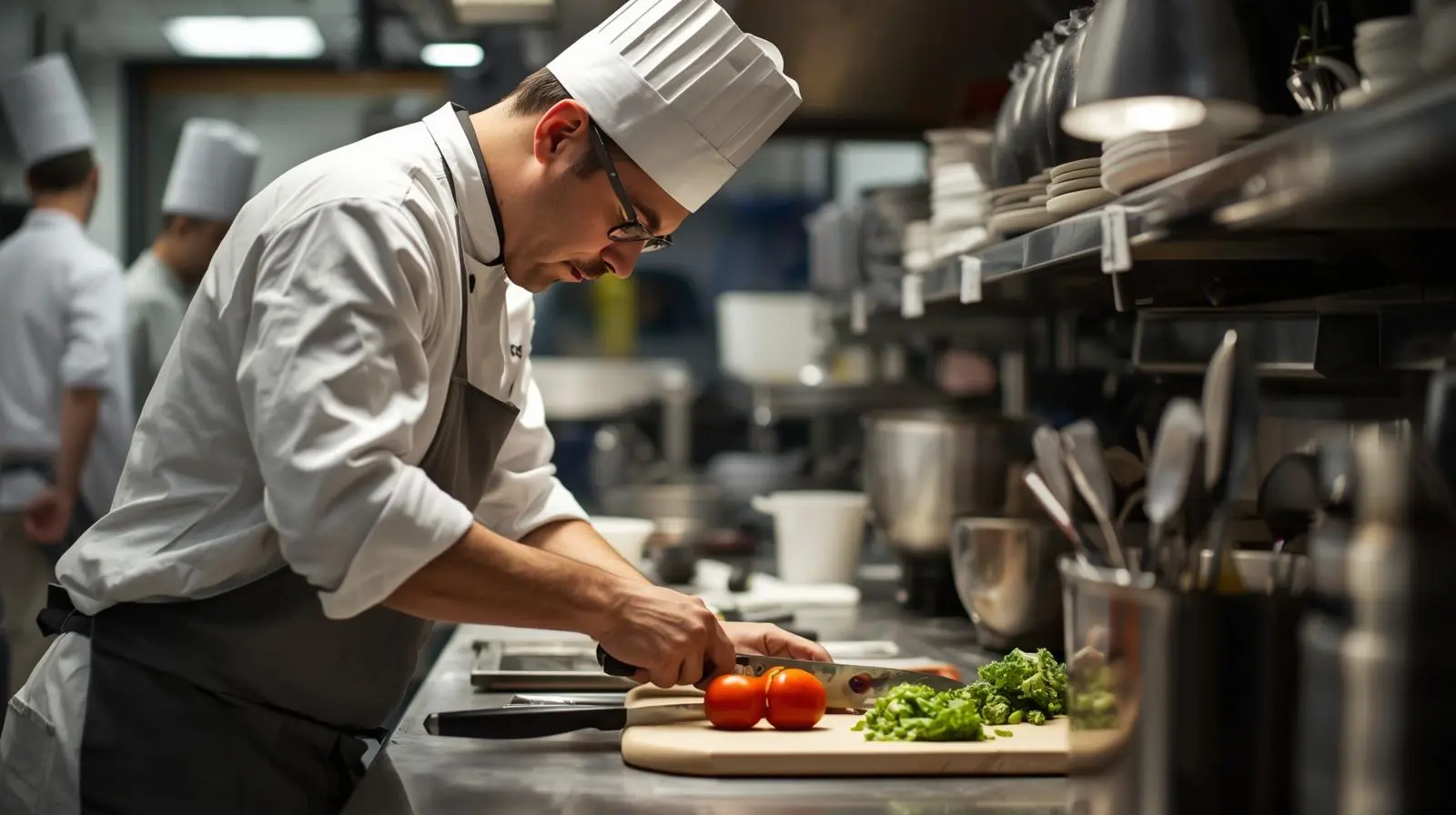
Behind every great meal is a complex web of inventory, prep work and timing. The back of house is where margins are made — or lost — and where AI agents for restaurant operations are making some of the biggest impacts.
Food waste costs the U.S. foodservice sector an estimated $162 billion annually, and roughly 19% of food globally goes to waste before reaching consumers. AI tools can dramatically reduce that by predicting what your kitchen needs.
These agents track historical sales, reservation counts, weather and special events to forecast prep quantities for each station. They can generate dynamic prep lists each morning, suggest order adjustments with suppliers and flag potential overages or shortages before they happen.
Advanced systems also:
Your restaurant’s reputation now lives online. Whether it’s a glowing Google review or a frustrated Yelp post, every comment shapes how potential guests perceive you. The problem is that manually managing hundreds of reviews and survey responses is time-consuming and inconsistent.
AI agents for customer feedback make this process effortless, ensuring every guest is acknowledged, every issue is logged and every insight is actionable. They achieve this through:
The AI tracks new reviews across platforms like Google, Yelp, and OpenTable, so you never miss feedback. It categorizes sentiment (positive, neutral, negative) and flags issues needing urgent attention.
Using your brand tone, the AI drafts tailored replies—warm thank-yous for praise and empathetic, constructive responses for complaints. You can approve, edit, or auto-publish responses, saving hours weekly.
When serious complaints arise—like service errors or food safety concerns—the AI immediately notifies management and recommends a resolution plan, ensuring fast, professional recovery.
By analyzing recurring themes (like “slow lunch service” or “great cocktails”), the AI surfaces operational trends that drive real improvement. Managers can spot patterns before they hurt ratings.
Mass blasts are easy; relevance is profitable. AI agents for restaurant marketing unify first-party data, such as POS, online ordering, Wi-Fi sign-ons, reservations and prior campaign engagement to build living guest profiles. From there, the agent segments audiences and triggers communications tied to behavior and context.
Content creation AI can generate engaging social media posts and visuals tailored for a restaurant setting, streamlining marketing efforts and maintaining brand consistency. AI marketing strategies also incorporate seasonal trends and upcoming events to ensure campaigns are timely and relevant. AI-driven loyalty programs enhance customer loyalty by offering personalized rewards and experiences, transforming traditional loyalty programs into powerful engagement tools.
A lapsed-90-day diner might receive a personal “we miss you” note that references a past favorite. A VIP could get early access to a chef’s table or wine dinner. When rain is forecasted, the agent can propose a cozy-night-in delivery push to households within your radius or flip to a “no patio, no problem” dine-in experience if your brand leans that way. Post-visit flows invite feedback and a nudge to book the next occasion before the glow fades.
AI enables personalized service through customer preference tracking, allowing the system to suggest menu items based on past orders and individual customer preferences, enhancing the overall guest experience. The AI agent attributes revenue, not just clicks. It matches redemptions, ticket sizes and repeat cadence back to campaigns so you can double down on what works. Over time, your restaurant communicates like a boutique brand at the scale and reliability of a national chain.
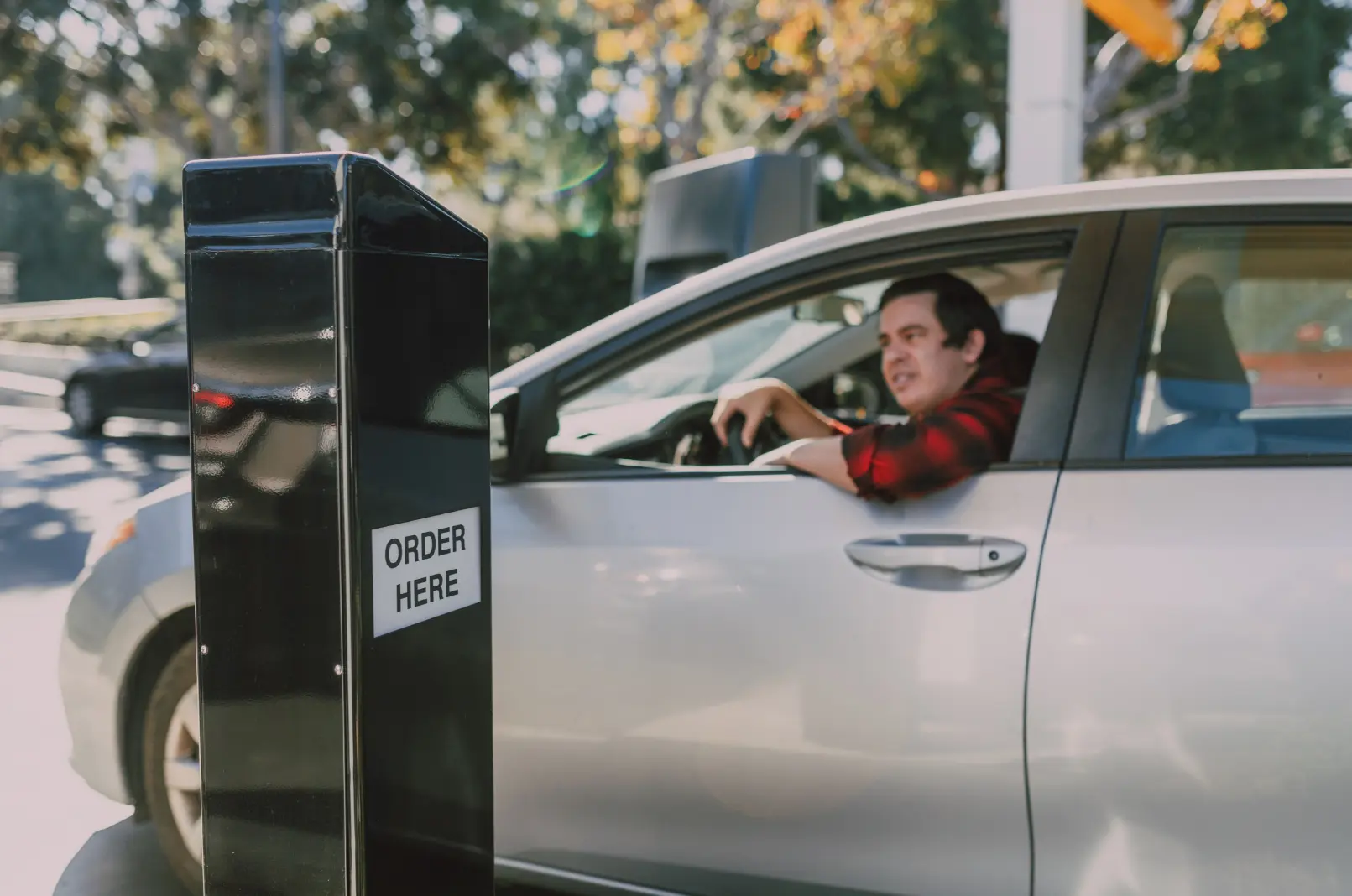
Few settings test efficiency like a drive-thru. Yet it’s also where AI agents for restaurants have proven their ability to deliver consistent, human-quality service.
Voice AI is about consistency and scalability, not just speed. It ensures every customer hears the same friendly tone, every upsell opportunity is delivered and every order is captured accurately. For full-service restaurants, the same principles apply when AI handles phone reservations or to-go orders, allowing hosts to greet guests rather than juggle calls.
Customer satisfaction in restaurants depends on three fundamentals: speed, friendliness and accuracy. In a world where diners expect quick responses and flawless service, even small lapses, like unanswered calls or incorrect orders, can damage loyalty.
AI for restaurants ensures consistency where it matters most. By handling routine communication, pacing and data management, AI lets staff focus on genuine hospitality rather than logistics. Some research shows that efficient, friendly interactions drive 97% satisfaction and nearly 90% accuracy, standards which AI helps maintain every time.
Here’s how it enhances the guest experience and helps deliver exceptional service, elevating both the restaurant experience and overall dining experience through personalized service:
When used wisely, restaurant AI strengthens the human touch. Guests experience faster, smoother and more personal service while your team has more time to deliver the attentiveness that keeps people coming back.
Adopting AI agents for restaurants is less about making a single leap and more about taking a series of well-timed, strategic steps. Every restaurant operates with different systems, pain points and team dynamics, so a successful rollout focuses on momentum instead of perfection.
The goal is to start where AI can make the most immediate impact, prove value quickly and then expand across operations once your staff sees the benefits firsthand. With the right approach, implementation becomes less of a technology overhaul and more of a natural evolution in how your restaurant works day to day.
Integrating AI agents for restaurants doesn’t have to be overwhelming. The key is sequencing your rollout to maximize impact and minimize disruption.
Start by addressing immediate losses, missed calls and unconfirmed reservations. Deploy an AI phone answering system for restaurants to ensure every inquiry is captured, and integrate it with your reservation platform for instant bookings. Layer in AI agents for customer feedback to automate review responses and identify early guest sentiment trends.
Next, tackle scheduling. Implement AI agents for staff scheduling to match staffing levels with demand forecasts. Monitor metrics like labor cost percentage and schedule adherence, then refine parameters. Staff will appreciate more predictable shifts, while managers gain hours back each week.
Once front-of-house operations are humming, bring AI into the kitchen. Use AI agents for restaurant operations to forecast prep quantities, reduce waste and manage ordering. Watch for improvements in inventory turns and food cost variance.
Finally, layer on growth-focused tools like AI agents for restaurant marketing. Launch personalized campaigns for returning guests, test offers and track incremental revenue. Once the foundations are in place, the returns compound month after month.
Choosing the right AI partner is one of the most important decisions you’ll make in this journey. The best technology won’t succeed if the vendor you select can’t integrate smoothly with your systems, support your team or maintain your brand’s reputation.
Selecting a vendor is less about flashy features and more about finding a partner who understands the rhythm of restaurant operations and the nuances of hospitality. A good provider will act as a collaborator and help you design, implement and measure success every step of the way.
When evaluating potential vendors, focus on these key areas:
Confirm that the vendor meets industry standards such as SOC 2 or ISO certifications. Ask about data isolation, encryption, retention and deletion policies. You should know exactly where guest data is stored, how it’s used and how it can be permanently removed if needed.
Seamless connection to your current stack is essential. The solution should integrate with your POS, reservation system, scheduling tools, phone systems and marketing platforms. An AI agent is only as smart as the systems to which it connects.
Look for flexible configuration options that allow you to control tone, policies and escalation rules. A well-designed AI solution should let you decide what’s automated and what always requires human review, especially for sensitive or brand-critical interactions.
Insist on clear, easy-to-read dashboards showing key performance indicators (KPIs) like recovered calls, confirmed reservations, labor savings, reduced waste or review response time. If a vendor can’t show ROI in measurable numbers, it’s not a true partnership.
Response time and recognition quality directly affect guest satisfaction. Test for real-world performance: does the AI pick up instantly, understand varied accents and respond naturally? It should never frustrate the caller or delay communication.
AI should never become a dead end. Ensure that escalation paths to human staff are seamless, with conversation transcripts or summaries passed along so guests don’t have to repeat themselves.
Before committing, request a short pilot period with defined goals (i.e., a 50% reduction in missed calls or a 20% drop in waste). A responsible vendor will help you benchmark success and adjust the setup based on real results.
Implementation should include staff training, documentation and live support during rollout. Vendors who provide restaurant-specific onboarding often achieve faster adoption and better team buy-in.
Whether you run one location or several, your vendor should support multi-unit growth, centralized analytics and evolving features as your needs change. Avoid tools that lock you into rigid packages or proprietary data formats.
Ask vendors about bias prevention, multilingual support, accessibility and data transparency. Customers should always be informed when interacting with AI, and your systems should uphold fairness and inclusivity.
The right vendor will help you build a smarter, more efficient operation that amplifies hospitality rather than replacing it. Treat the selection process as a partnership, and choose a provider who understands both the power of technology and the soul of your restaurant.
Restaurant AI only works when it strengthens instead of replacing hospitality. Transparency builds trust, so if customers are speaking with an AI system, make it clear. Many diners appreciate the convenience as long as the experience feels respectful and human.
Bias and accessibility are also key. Choose solutions that handle multiple languages and accents gracefully and support text-based alternatives for guests with hearing impairments. The best AI systems are inclusive by design, reflecting the diversity of the diners they serve.
Data ethics cannot be overlooked. Restaurants collect vast amounts of personal information, from reservation histories to payment data, and must handle it responsibly. Store only what you need, secure it rigorously and offer guests control over their data.
Human oversight in AI remains essential. AI can automate and enhance operations, but true hospitality still requires empathy, intuition and flexibility.
Before investing in any new technology, you need to understand the real financial and operational impact. Fortunately, the business case for AI agents for restaurants is straightforward and measurable.
By reducing missed opportunities, optimizing labor, cutting waste and automating repetitive work, restaurant AI often pays for itself within weeks. The key is to quantify where inefficiencies exist today and calculate the lift that AI can realistically deliver.
Start by identifying your biggest “leaks,” or the parts of your operation where time or money is consistently lost. These usually fall into four areas: phone calls, labor, food waste and customer retention. Once you’ve estimated your current losses, you can easily model your potential return.
If your restaurant receives around 175 calls per day and misses 35% to 40%, that’s about 70 missed calls daily. Even if only half of those represent potential reservations or orders, recovering them through an AI phone answering system for restaurants could add 20 to 30 new engagements per day. Over a year, that adds up to hundreds of additional covers and thousands in incremental revenue without increasing labor.
Most restaurants can trim 1.5% to two percent off total labor costs with AI agents for staff Scheduling. For a business generating $1 million annually, that equates to around $15,000 to $20,000 in savings per year. The AI’s predictive scheduling reduces unnecessary shifts, prevents overtime and gives managers back hours each week previously spent editing schedules.
Back-of-house optimization is another major driver. The average U.S. restaurant loses up to $162 billion annually across the industry due to food waste. By using AI agents for restaurant operations to forecast prep needs and monitor inventory, many operators report waste reductions of up to 50%, translating directly into lower COGS and tighter margins.
Automated confirmations and AI-managed waitlists can significantly reduce the 28% of diners who admit to missing at least one reservation annually. Filling canceled seats quickly also increases average daily cover counts, stabilizing revenue on high-demand nights.
AI agents for customer feedback and restaurant marketing improve retention and repeat bookings by responding to reviews, sending personalized offers and maintaining guest relationships at scale. These systems typically increase repeat visit rates by 5% to 10%, which can boost long-term revenue by tens of thousands per year for multi-unit operators.
When combined, these gains produce a clear ROI story. A typical restaurant that introduces AI across phones, scheduling, feedback and prep forecasting can expect to see cost savings and revenue growth well above its monthly subscription cost. The payback period for most operators falls within one to three months, with ongoing gains that compound as data improves.
The numbers build a business case that’s hard to ignore. AI doesn’t replace hospitality; it protects it by removing inefficiencies that stand between your staff and your guests. By approaching adoption strategically, restaurants can unlock measurable profitability while delivering the kind of seamless, attentive experiences that today’s diners expect.
Rolling out AI for restaurants doesn’t have to be complicated or time-consuming. In fact, many of the most impactful results, including capturing missed calls, improving scheduling and automating guest feedback, can happen in just a few weeks. The key is to start small, focus on measurable wins and build momentum as your team gains confidence with the tools.
This 30-day roadmap is designed to help you move from planning to execution quickly, creating tangible results in your first month. Each week builds on the last: first capturing lost revenue, then improving efficiency, then layering on optimization and growth. By the end of the month, you’ll have a connected, intelligent system supporting both your front and back of house and a clear sense of the ROI you can expect going forward.
As AI reshapes the restaurant industry, operators are realizing that success depends on more than just adopting tools; it’s about choosing the right partner. Revmo stands at the forefront of this transformation, offering an integrated suite of AI agents for restaurants designed to enhance every guest touchpoint and operational process.
Our platform brings together the most impactful innovations in restaurant AI, from AI phone answering systems and automated reservation management to AI-driven scheduling, marketing and feedback loops, all working in harmony. By learning from each interaction and integrating seamlessly with existing POS, CRM and reservation systems, our platform delivers measurable improvements in efficiency, consistency and revenue.
With Revmo AI, every agent is designed to preserve your brand’s voice and standards while amplifying your team’s ability to deliver personalized, high-quality service. From independent fine-dining establishments to multi-location groups, Revmo helps restaurants reclaim time, capture more revenue and deliver experiences guests remember.
As the leader in AI for restaurants, Revmo is building smarter tools and redefining what’s possible when technology and hospitality work together.

CEO and Co-Founder
Ryan is a seasoned executive and entrepreneur with more than 18 years of technology consulting, industry and start-up experience.