
What PCI Compliance Means for Voice AI in 2026
PCI DSS is mandatory in 2026. Here’s what it means for voice AI, what Revmo handles, and what to ask any vendor before you sign.
Blog
Read More
The phone is still the single most direct bridge between hungry guests and your kitchen. For many restaurants, it’s where good impressions become loyal customers.
The old model of human-staffed answering services or an overworked host juggling orders and front-of-house duties is breaking down under persistent labor shortages and customer impatience. Franchises that treat the phone like a relic risk losing orders, loyalty and revenue.
The smarter move is to treat the phone like a digital channel and migrate to voice artificial intelligence (AI) — not to replace humans, but to empower them. Artificial intelligence for restaurants, especially an AI phone answering system for restaurants, is rapidly becoming the better option compared with traditional answering services. It’s also what multi-unit operators should consider when evaluating AI agents for restaurants.
Even in an app-driven world, many diners prefer to call. Phone orders often come from higher-value, repeat customers who want quick modifications, large group orders or reservations. When those calls go unanswered, the cost is real. Restaurants miss a substantial share of inbound calls, leak that translates into thousands of dollars annually for many venues.
Call abandonment is also a major user experience (UX) problem. Roughly 70% of business calls result in a hold time of at least 45 seconds, and about 60% of customers who wait on hold for too long will just hang up.
In an era dominated by online ordering, apps and digital engagement, phone calls remain one of the most crucial touchpoints for restaurant franchises. For many customers, picking up the phone is the fastest way to place an order, make a reservation or ask about menu items.
For multi-unit franchises, though, managing high call volumes across dozens or hundreds of locations presents a significant operational challenge. Missed calls are not just an inconvenience. They directly translate into lost revenue and diminished customer satisfaction.
Missed calls hurt franchises through:
Every unanswered call represents a potential sale that disappears. Effective order management systems can help ensure that every call is converted into a sale, reducing the risk of lost revenue. For a franchise with dozens of stores, these lost calls can accumulate into hundreds of thousands of dollars in unrealized sales annually.
Consumers expect immediacy. Waiting on hold or getting a busy signal can frustrate customers, leading them to turn to competitors. For multi-unit franchises, inconsistent call handling across locations can result in uneven guest experiences, which erodes brand trust and loyalty over time. This inconsistency can also negatively impact guest satisfaction by increasing the risk of order errors and miscommunication, ultimately diminishing the overall dining experience.
When calls are missed, staff may need to manually follow up, disrupting workflows in the kitchen or on the floor. This inefficiency increases labor costs and places unnecessary strain on employees who are already multitasking during busy periods.
While a single missed call may seem negligible, the effects scale quickly in multi-unit operations. Consider a franchise with 50 locations, where even a five percent missed call rate could translate into thousands of lost transactions per month, making the cost of missed calls one of the largest hidden inefficiencies in restaurant operations.
Advanced voice AI platforms ensure that every call is answered promptly, orders are captured accurately and customer inquiries are handled consistently. By automating the first point of contact, franchises can:
For multi-unit franchises, adopting AI agents for restaurants is not just a convenience. It’s a strategic decision that protects revenue, enhances the guest experience and improves operational efficiency at scale.
Even as AI phone answering systems for restaurants gain traction, traditional answering services still hold a place in many operations, particularly smaller, single-unit restaurants or franchises just beginning to automate. Understanding what these services do well and where they fall short is crucial for multi-unit operators considering a shift to AI.
One of the strongest advantages of traditional answering services is the human element. Staff can empathize, clarify complex requests and adjust tone based on the caller’s mood. This personal touch can enhance customer satisfaction in certain situations, especially for boutique dining experiences.
Answering services excel at managing overflow and after-hours calls. For restaurants without dedicated staff to cover phones, they provide a basic safety net to ensure customers are at least greeted, and messages are taken.
A staffed answering service can be available 24/7 for calls, reducing the risk of missed messages during off-hours. Some services even offer multilingual support, which can be valuable in diverse markets.
Human operators are prone to mistakes, such as mishearing menu items, incorrectly recording special requests or mishandling complex orders. In a fast-paced, high-volume environment, even small errors can accumulate into lost revenue or frustrated customers.

Multi-unit franchises require consistency in customer interactions. Answering service agents often vary in tone, script adherence and understanding of menu offerings, leading to a fragmented experience across locations. Inconsistent messaging can dilute brand identity and negatively affect customer loyalty.
Maintaining or contracting a 24/7 answering service can be expensive, particularly for franchises with many locations. Costs scale with call volume and hours of coverage, and unlike AI, human operators cannot provide a per-call cost model tied to actual performance outcomes.
Traditional services rarely connect directly with a restaurant’s point-of-sale (POS), customer relationship management (CRM) or online ordering systems. This means orders taken over the phone often require manual entry, creating opportunities for errors, delays and double work for staff.
While a single answering service may manage a small number of calls effectively, scaling to dozens or hundreds of locations introduces complexity. Coordinating multiple agents across regions, ensuring consistent training and monitoring performance can become an administrative burden that grows exponentially with the number of units.
Traditional answering services (third-party call centers or a shared live receptionist) have advantages, such as a human touch, ad-hoc problem solving and a sense of warmth that machines historically couldn’t replicate. They work well for complicated service flows and when escalation to a manager is needed.
However, answering services struggle with scale, consistency and cost in franchise environments:
Restaurants and franchises today operate in a radically different customer environment than even five years ago. Diners expect instant responses, easy ordering and personalized service, whether they’re calling from the car on their commute or booking a table during a lunch rush.
Traditional call-handling systems simply can’t keep up. A host answering phones during peak hours can’t be expected to simultaneously juggle dine-in guests, order accuracy and phone inquiries. Outsourced answering services, although better than voicemail, often introduce inconsistent guest experiences across locations.
This is where artificial intelligence for restaurants, specifically AI phone answering systems for restaurants, proves to be a game-changer. Instead of relying on limited human capacity, voice AI enables your phone line to become an intelligent, always-on sales and service channel that’s integrated with your POS, loyalty and reservation systems.
Modern AI agents for restaurants don’t just answer calls; they handle them with precision, speed and brand consistency, delivering a seamless guest experience that scales effortlessly across every franchise unit. AI phone answering systems can also accurately take and manage delivery orders, guiding customers through the menu, collecting order details and processing delivery preferences for a smooth delivery experience.
AI agents bring to the table:
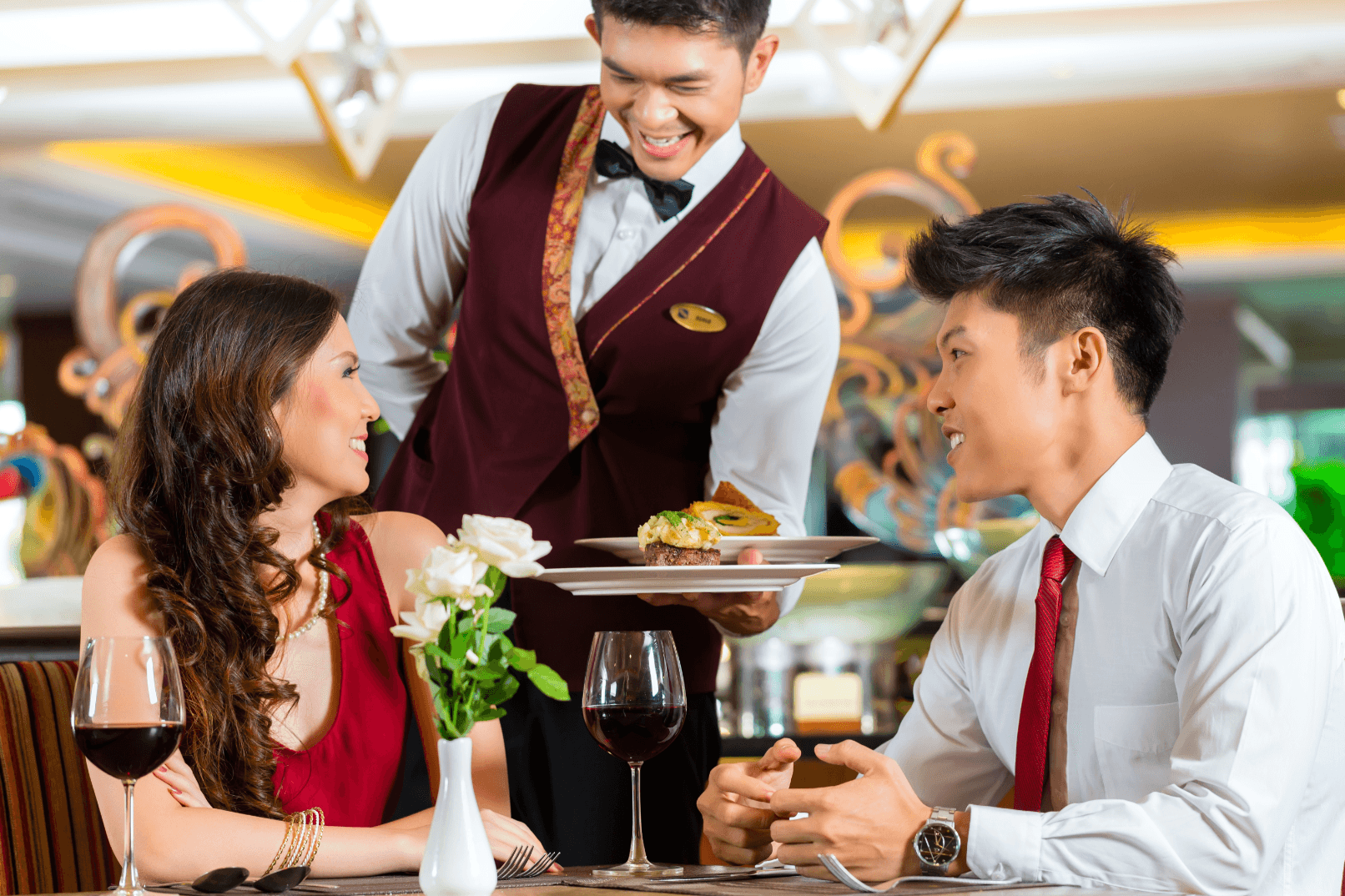
In today’s highly competitive restaurant industry, operators are constantly seeking new ways to stand out and deliver exceptional customer experiences. One of the most powerful tools at their disposal is the combination of customer data and advanced AI technologies. By harnessing the power of AI tools, restaurants can unlock a new level of personalization and operational insight that was previously out of reach.
AI agents can analyze customer data from past orders, reservations and interactions to identify patterns and preferences unique to each guest. This enables restaurants to suggest menu items based on previous choices, provide accurate responses to frequently asked questions and even tailor recommendations for daily specials or new offerings. Whether you’re running a fine dining establishment or a quick service restaurant (QSR) franchise, this level of personalization can substantially enhance the dining experience and drive customer loyalty.
AI also plays a crucial role in improving online ordering and delivery operations. Integrated voice assistants and chatbots can guide customers through the ordering process, answer menu questions and handle special requests or catering inquiries, all while reducing wait times and minimizing errors. This seamless experience not only boosts customer satisfaction but also encourages repeat visits and strengthens loyalty programs.
For multi-unit operators, the ability to access real-time analytics and actionable insights is a game-changer. AI-powered systems can track peak call times, monitor order trends and analyze guest feedback across all locations. This data empowers restaurant operators to make informed decisions about menu development, marketing campaigns and supply chain management, ultimately driving business growth and operational efficiency.
Implementing AI in restaurants does require careful planning, especially when it comes to data privacy, security, and customization options. It’s essential to choose AI solutions that comply with industry regulations and can be tailored to reflect your brand’s unique voice and hospitality standards. The right AI partner will help you deliver a personalized, secure and consistent customer experience at every touchpoint.
By automating mundane tasks and providing accurate responses to customer inquiries, AI allows your team to focus on delivering memorable guest experiences. Whether you’re serving gourmet cuisine or quick bites, leveraging customer data and AI tools is the key to unlocking real value and staying ahead in the restaurant industry.
Implementing new technology across multiple restaurant locations can feel risky, but that’s exactly why pilot programs are so valuable. Before investing at scale, forward-thinking restaurant franchises are testing AI phone answering systems for restaurants in real-world conditions to validate impact.
These short-term pilots, often lasting 30 to 60 days, allow operators to see how AI for restaurants performs under pressure: during lunch rushes, after-hours calls and unexpected volume spikes. The data coming out of these early pilots paints a compelling picture in which AI agents for restaurants augment human call handling, streamline workflows and uncover lost revenue opportunities.
Many restaurant operators report seeing immediate benefits. Calls that previously went unanswered are now converted into confirmed orders, reservations or catering inquiries. Customers no longer wait on hold or get transferred between locations, leading to higher satisfaction and stronger loyalty.
The best pilots measure multiple dimensions of performance, including labor savings, call accuracy and upselling effectiveness. Franchise operators commonly observe the following advantages when they run AI answering pilots in real settings:
The restaurant industry is embracing automation and AI faster than ever, fundamentally changing how work is performed and how the restaurant experience is delivered. According to a survey by Deloitte, eight-in-ten restaurant executives say their organization’s AI investments are increasing next year. For franchises, this means that early adopters will likely enjoy competitive advantages long before AI becomes a standard expectation.
Selecting the right AI phone answering system for restaurants is less about finding the flashiest technology and more about identifying a solution that integrates smoothly with your existing operations. Restaurant franchises operate in fast, high-stakes environments where efficiency, consistency and customer experience matter most.
The ideal AI partner should offer strong integrations with your POS, online ordering and reservation systems, ensuring every call can directly translate into action without manual intervention. Equally important is voice quality and natural conversation flow.
Leading AI agents for restaurants are powered by advanced natural language models that can understand accents, slang and common ordering nuances. These systems leverage machine learning to continuously improve their understanding and personalize interactions based on customer data. That means customers feel like they’re talking to a knowledgeable, polite team member rather than a robot.
You’ll also want a system that provides analytics, which offer insight into peak call times, frequent menu requests and order conversion rates. Those data points can help franchise owners make better staffing, menu and marketing decisions.
Support and scalability are other key considerations. A good AI for restaurants platform will make it easy to roll out across multiple locations, with the flexibility to customize greetings, specials and workflows for each franchise unit.
Look for vendors that offer clear onboarding, training materials and responsive technical support so your teams can adapt quickly and confidently. Most importantly, the best systems act as a true brand extension and deliver the tone, professionalism and hospitality that define your restaurant’s customer experience.
Selecting the right AI phone answering system for restaurants is a crucial decision for franchise operators. The market offers several options, but the differences in scalability, integration and accuracy can have a major impact on operational efficiency and guest experience.
In this table, we break down the leading platforms and compare them across key factors, such as performance, integrations, scalability and suitability for multi-unit operations. The goal is to give franchise decision-makers a clear, data-driven perspective so they can choose a solution that not only handles calls but also drives revenue, maintains brand consistency and scales seamlessly across locations.
By evaluating these platforms side by side, operators can see where each solution excels and where it may fall short, enabling informed decisions that balance cost, functionality and long-term operational impact.
| Category | Revmo | Loman AI | Slang AI |
| Product positioning | The only AI for restaurants platform built specifically for enterprise-scale phone automation. Revmo delivers full-stack voice AI that connects directly to POS, ordering, CRM and loyalty systems. It’s built for national and multi-unit franchises that demand consistency, data and measurable ROI. | General-purpose AI phone answering system for restaurants with a simple rules-based approach to voice handling. Suitable for small operators but lacks the advanced integrations and analytics large restaurant systems require | Entry-level conversational AI agents for restaurants, designed mainly for reservation and FAQ management. Offers natural voice quality but limited depth and functionality for true order automation |
| Notable case studies / customers | Donatos Pizza: Revmo powered more than 300,000 calls across 174 stores with 99.9% order accuracy and 71% order conversion, proving its ability to handle high-volume franchise operations. | Few large-scale deployments published; current use cases limited to small and mid-size restaurant groups. Lack of verifiable enterprise results raises scalability concerns | Works with boutique hospitality groups but no public data showing multi-unit or enterprise-level success |
| Key integrations | Native integrations with major POS systems, online ordering, CRM and loyalty tools; includes call analytics dashboards and API flexibility | Integrates primarily with Google Voice and calendar tools; no direct POS or loyalty integrations without developer workarounds | Connects mainly to OpenTable and SevenRooms; lacks ordering and payment system connectivity |
| Pricing (public) | Transparent, performance-based pricing from $0.59 per conversation; enterprise tiers available for franchise networks | Subscription model at $199 to $299/month per location; limited scalability features make per-store costs add up quickly for franchises | Custom quotes only; cost structure unclear for multi-location use |
| Speed to deploy | 30-day pilot available; rollout designed for full enterprise deployment with dedicated onboarding support. | Fast setup, but basic; often implemented without system integration, meaning automation stops at message taking or scheduling | Quickest setup but minimal functionality; best suited for low-volume call coverage |
| Strengths | Proven performance, unmatched order accuracy, brand-consistent tone, rich analytics and franchise-grade scalability | Affordable entry point and rapid setup for independent restaurants | Very natural voice tone; ideal for boutique or fine-dining reservation calls |
| Limitations / risks | Requires initial integration work to unlock full automation potential, but once configured, performance is industry-leading | Not enterprise-ready: lacks deep POS integration, detailed analytics and proven load capacity. Voice model accuracy drops in noisy environments. Limited product support documentation and minimal customization | Superficial AI depth: handles only basic guest interactions; no order management or POS sync. Best described as a hospitality “front-desk assistant,” not a true operational AI. Minimal transparency into uptime, metrics or post-call data |
| Best fit | Multi-unit and national restaurant brands seeking an enterprise-grade AI phone answering system for restaurants with measurable ROI and brand consistency | Independent or regional operators who need low-cost call coverage, not deep automation | Boutique dining concepts prioritizing conversational tone over technical integration |
Rolling out new technology across a restaurant franchise is never as simple as flipping a switch. Each location comes with its own rhythm, staffing realities and customer expectations.
Introducing an AI phone answering system for restaurants adds both opportunity and complexity. That’s why successful multi-unit rollouts depend on careful planning, strong vendor collaboration and consistent measurement. Franchise operators who take the time to pilot, refine and standardize before scaling often see smoother adoption and stronger ROI.
Unlike point solutions that only impact back-of-house efficiency, AI for restaurants directly touches the guest experience. A poorly managed rollout risks inconsistent messaging, confused staff or call-routing errors that can affect brand perception.
On the other hand, when implemented strategically, AI agents for restaurants can unify call handling across every location, creating a seamless customer experience that feels both personalized and consistent. Early adopters often report that guests can’t tell whether they’re speaking to a human or AI, and that staff quickly come to rely on the system as an indispensable teammate rather than competition.
A good rollout plan begins with alignment. Leadership, franchisees and front-line managers must understand why voice AI is being adopted and what success looks like. From there, standardize call flows and menu data across all systems before scaling, ensuring the AI performs consistently across locations.
Strong internal communication and training are crucial, not to teach the AI but to help people trust it. Once live, regular performance reviews and feedback loops allow teams to tweak scripts, fix integration issues and continuously improve the guest experience. Recommendations for implementing voice AI for your restaurant franchise include:
When evaluating an AI phone answering system for restaurants, you want more than just buzzwords. You need proven results, seamless integration and a partner who understands the restaurant business inside and out. That’s why Revmo AI stands out as a top choice for restaurant operators like you looking to future-proof call handling, improve guest experience and drive revenue.
One of the clearest indicators of Revmo’s effectiveness comes from our rollout with Donatos Pizza across 174 stores. With our voice AI system fully integrated, the Donatos chain achieved:
Schedule a demo today to find out how you can achieve similar results for your restaurant franchise. Also, check out our recent blogs.

Sales Engineer
David Stoll is a Sales Engineer with Revmo AI. With over 6 years of experience in Conversational AI, David is an expert in crafting conversations for brands that engage their users and push revenue forward.
PCI DSS is mandatory in 2026. Here’s what it means for voice AI, what Revmo handles, and what to ask any vendor before you sign.