What PCI Compliance Means for Voice AI in 2026
PCI DSS is mandatory in 2026. Here’s what it means for voice AI, what Revmo handles, and what to ask any vendor before you sign.
Blog
Read More
There are 1,440 minutes daily and 168 hours weekly. No amount of money or fame can change that.
Americans are busier than ever, and fitting more activities into those minutes and hours prompts their need for convenience. When they contact companies for support, they prefer as quick a resolution as possible.
Businesses’ first point of contact for consumers is typically tier 1 support. Designed to handle general inquiries, such as account setup, password resets, and order tracking, it enables customers to procure answers that, a majority of the time, don’t require a human agent.
For those agents, tier 1 support consists of numerous time-consuming, repetitive, and routine tasks. More staff are needed during high-volume operating hours, whether it’s due to peak seasons, product launches, or some other variable.
In high-volume periods, it’s not unusual for resolution times to be slower, leading to customer frustration. Maintaining consistency across multiple channels (i.e., voice, email, apps, chat) becomes nearly impossible, and manual escalation processes often cause additional delays, putting more stress on agents and adding to already high turnover rates.
The solution isn’t always adding headcount to your contact center, though. Businesses continue to turn to artificial intelligence (AI) to lighten the load of interactions while reducing the burden on human agents and delivering faster resolutions without sacrificing the quality of customer service.
Again, traditional tier 1 support relies heavily on manual processes. This approach works at low volumes but doesn’t scale without cost.
As query volume increases, so does the demand for staff. Each new employee hire adds time and expense through recruiting and training, which don’t necessarily mitigate high agent turnover.
Consistency challenges extend beyond scalability because the performance of human contact center agents varies based on fatigue, training gaps, or knowledge inconsistencies. Manual escalation processes make things worse because, without real-time data visibility, identifying which issues need to be escalated takes longer than it should. Such delays decrease satisfaction and increase operational costs, sometimes for interactions that didn’t need to escalate at all.
AI for customer service changes the economics of tier 1 support by automating the work that consumes the most time and delivers the least value. AI agents can simultaneously handle high-volume tier 1 calls and respond instantly and consistently across every channel.
AI agents use natural language processing (NLP) to understand what customers are saying, no matter how they phrase it. Rigid scripts and structured menus aren’t necessary.
With AI platforms, customers can speak naturally, and the agent responds with accurate answers drawn from a current knowledge base. This is where conversational AI replaces the linear, gated flows that previously frustrated customers.
Machine learning allows these systems to improve over time by identifying what worked, what didn’t, and where customers ran into friction. The technology then uses that information to improve future responses, so, unlike a static script, AI in customer service gets better as it processes more volume.
AI tools also integrate with customer relationship management (CRM) systems, order management platforms, and service history databases to pull real-time customer data, so customers don’t have to repeat themselves. The system already knows who they are, what they ordered, and what they’ve asked before, which supports personalized support at a scale.
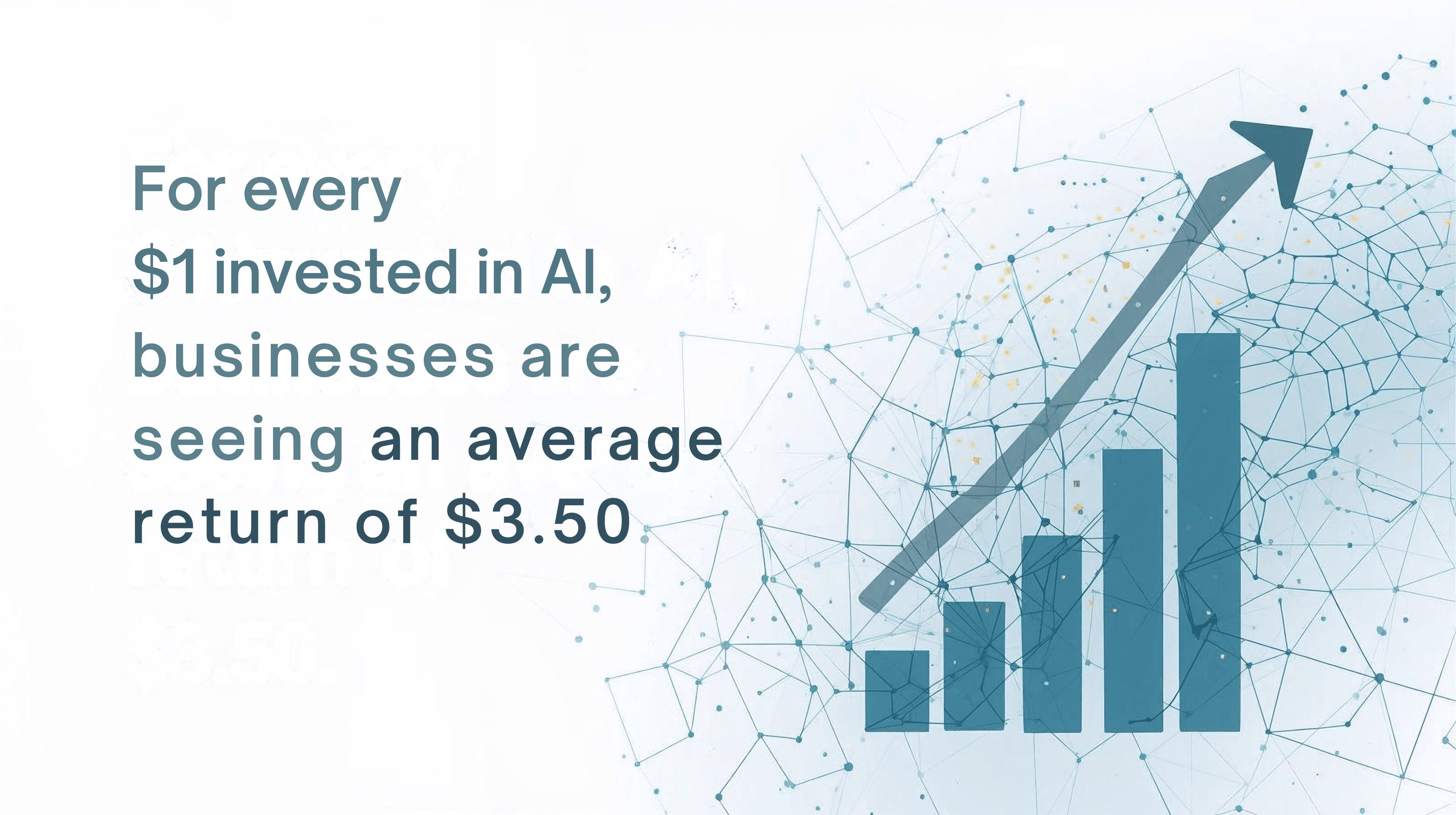
There’s data to back up the advantages of AI in customer support. Gartner predicts conversational AI will reduce contact center agent labor costs by $80 billion in 2026, and a measurement study found that support agents using an AI tool handled 13.8% more inquiries per hour than those without. Plus, for every $1 invested in artificial intelligence, businesses are seeing an average return of $3.50.
AI agent handling of tier 1 calls positively impacts customer satisfaction, agent efficiency, and the overall structure of support operations. Ninety percent of consumers rate an “immediate” response as important or very important when they have a customer support question, and AI agents provide that level of response every time without routing delays. That responsiveness boosts the type of customer satisfaction that builds lifetime value.
AI also benefits human agents. When the technology handles routine inquiries, such as password resets, order tracking, appointment scheduling, and basic FAQs, customer service representatives can focus on complex tasks that require judgment, empathy, and expertise.
Other advantages of AI agents at tier 1 include:
One of the most underappreciated benefits of artificial intelligence in customer service is the ability of AI agents to collect, analyze, and act on customer data in real time. By pulling from past interactions, purchase history, and behavioral patterns, AI tools can deliver personalized support, reference past customer orders, note any previously flagged issues, or suggest next steps based on those needed by similar customers.
This integration with CRM systems enables conversational AI to understand individual customer context and use it to guide the conversation toward a faster and more satisfying outcome. AI agents also use machine learning to track customer behavior across service interactions, including what types of requests come in most frequently, where customers typically get stuck, and how customer sentiment shifts during a conversation.
Sentiment analysis gives human contact center agents visibility into the emotional tone of interactions, making service strategies more accurate and responsive. Predictive analytics in AI systems takes this further by analyzing historical data and past interactions to identify when a customer is likely to need help before they ask and proactively address common friction points before they become complaints.
Without AI, customer sentiment is one of the clearest signals in support operations and most difficult to manually monitor at scale. Sentiment analysis embedded in AI tools allows systems to monitor the emotional tone of service interactions in real time, so when a customer’s language signals frustration, urgency, or confusion, the system detects it and adjusts.
The ability to analyze customer sentiment at scale gives support teams access to actionable insights and patterns without having to review individual tickets. These human agents can find out if customers are frustrated about a specific product, whether a new policy is generating confusion, or if a specific tier 1 workflow is consistently failing to resolve issues. It’s the type of insight that supports better service strategies across the customer journey.
Recognizing the limits of automation separates effective AI deployment from a poor customer experience. AI agents handle tier 1 calls well when the issue is routine, the path to resolution is clear, and the customer primarily needs information or a straightforward action completed.
Sometimes, though, human touch matters more than speed. Complex problems that require judgment, nuanced communication, or technical expertise shouldn’t stay with AI. Examples include a customer dealing with a billing dispute involving unusual circumstances, a product issue that’s part of a larger safety concern, or a situation that’s outside the parameters of the knowledge base.
Emotionally charged interactions are another category of customer inquiries that require a human agent. When customer sentiment signals high distress, support agents need to step in. AI can detect those signals, but a human connection is what repairs trust. Complex issues that have escalated through multiple channels or situations where the customer has already been through a failed resolution attempt also benefit from human intervention.
The goal is to route the right interactions to AI so that human agents are available and focused when necessary. It’s intelligent escalation control in practice.
AI doesn’t disappear when a conversation escalates. The best implementations of AI in customer service keep AI tools active in the background to assist human agents throughout the interaction. In this model, AI and human support are working together instead of competing. AI handles the volume, and human agents deal with the judgment.
When a complex call routes to a customer service rep, AI surfaces relevant customer data, past interactions, and suggested responses in real time. Agents don’t have to search multiple systems while a customer is waiting because the context is already in place.
AI tools can also coach agents by flagging when a response might miss the mark, identifying opportunities to upsell or offer relevant solutions, and automatically summarizing support conversations when the call ends. That removes manual work, keeps the CRM current, and gives support teams cleaner data for ongoing improvement.
Machine learning models analyze what the most effective customer service reps do differently and facilitate the building of those patterns back into the system to lift agent efficiency across the entire staff. The objective isn’t to replace skilled agents but to provide them with better tools.
The way AI is implemented in support operations determines whether it improves customer engagement or creates friction. Considerations to address include:
Implementing AI successfully also requires attention to change management. It necessitates that human customer service agents understand that they’re not being replaced. Instead, their role is to handle more complex, higher-value interactions that require their judgment and skills.
One in six contact centers has already deployed AI capabilities. That number will continue to grow as implementing AI becomes commonplace rather than an edge case in various industries.
Most AI platforms solve one piece of the puzzle but don’t carry the interaction through to completion. That gap is where customer experience breaks down.
Revmo is different because it’s the orchestration layer behind every customer interaction, turning natural conversations into real outcomes across voice, text, and chat. At tier 1, our powerful AI agents autonomously resolve tier 1 calls with the kind of conversational AI that feels natural. No scripts.
When tier 1 calls require a human, Revmo AI uses Intelligent escalation control that gives businesses precise command over when and how interactions move to human agents based on intent, customer sentiment, and business rules. Support teams receive full context when they pick up, so agents don’t have to start over.
Beyond tier 1, our platform orchestrates workflows, such as scheduling, ordering, escalation routing, and multi-system coordination, all through a single conversational engine and across every channel. Whether a customer calls, texts, or chats, they get the same experience.
AI in customer service works best when it’s built to resolve, not just respond. That’s what Revmo AI does at tier 1 and every tier after it.

Sales Engineer
David Stoll is a Sales Engineer with Revmo AI. With over 6 years of experience in Conversational AI, David is an expert in crafting conversations for brands that engage their users and push revenue forward.
PCI DSS is mandatory in 2026. Here’s what it means for voice AI, what Revmo handles, and what to ask any vendor before you sign.