What PCI Compliance Means for Voice AI in 2026
PCI DSS is mandatory in 2026. Here’s what it means for voice AI, what Revmo handles, and what to ask any vendor before you sign.
Blog
Read More
The service drive has quietly become the make-or-break profit center for modern dealerships, directly impacting both service and sales performance. As margins on variable operations tighten, fixed ops has to carry more weight. Every lost call, slow hold time or clunky handoff shows up on the profit and loss (P&L) statement. These issues often result in inconsistent customer experiences for both customers and dealerships, leading to variable service quality and missed opportunities.
Multiple industry trackers report that fixed ops now accounts for roughly half of total dealership gross profit, a share that climbed again through 2024 as front-end profit cooled. Customers aren’t getting easier to serve, though.
Dealership service lanes at car dealerships have been losing market share to independent shops, with the dealer share of service visits in the United States sliding from 35% to 30% in just two years, even as total visits rise and vehicles age on the road. That means every interaction matters more, and first contact (usually a phone call) often decides whether you win the appointment or lose the customer.
Enter the artificial intelligence (AI) phone agent that automotive providers are piloting right now. These solutions are specifically tailored for the auto dealership environment, addressing unique needs in both sales and service. The always-on voice agents answer every call, book appointments in your dealer management system (DMS), handle after-hours spikes and escalate seamlessly to humans when needed. They are a direct lever on throughput, customer satisfaction index (CSI) and retention.
The automotive industry is experiencing a profound transformation as AI technologies become central to every aspect of operations. From revolutionizing design with advanced driver assistance systems to optimizing supply chain management and predictive maintenance, AI is enabling automotive companies to streamline operations, improve efficiency and reduce costs. These innovations are not just about smarter vehicles. They’re about delivering better customer experiences at every touchpoint.
AI-powered tools are helping automotive companies enhance customer engagement, personalize services and respond to evolving market demands with agility. Intelligent systems now monitor vehicle performance in real time, anticipate maintenance needs and support safety-critical functions, making vehicles safer and more reliable. As AI continues to drive innovation, the automotive industry is becoming more customer-centric, efficient and competitive. Embracing artificial intelligence is no longer optional; it’s the key to staying ahead in a rapidly evolving market and delivering the next generation of mobility solutions.
Even in heavily digital categories, high-intent scheduling still happens on the phone. Cross-industry call center benchmarks put acceptable abandonment rates at only two to five percent, with anything higher correlating with churn and lost revenue. That standard is tough to meet during peak hours and after-hours without help.
If callers are put on hold for more than 30 seconds, more than one-third of them will hang up and not call back. The market pressure is real: dealer groups and analysts alike point to fixed ops as the most reliable gross-generator, reinforcing the ROI of capturing (and converting) every inbound opportunity with tools like AI for automotive. An AI phone agent not only handles follow-ups but also schedules appointments efficiently, reducing missed opportunities. The clear benefits of implementing AI phone agents include improved appointment rates, reduced wait times and increased customer satisfaction.
Missed calls and long hold times are one of the biggest culprits in lost service revenue. Studies suggest that more than one-quarter of inbound calls can be lost to abandonment in understaffed centers, an unacceptable leakage for high-intent scheduling like automotive service.
After-hours coverage remains another blind spot. Many service departments still funnel callers into voicemail when staff leave for the evening, even though predictable spikes, such as Monday mornings or seasonal tire changes, drive after-hours traffic.
Meanwhile, independent repair shops are stepping in to fill the gap. They often answer faster, book sooner and win over customers with quicker scheduling. AI-enabled shops now rival or surpass human staff on speed and quality for routine service scheduling, underscoring the advantage of an AI phone agent that automotive providers are adopting.
Intelligent automation in these systems enhances the customer experience by providing faster, more accurate service scheduling and seamless interactions. These improvements ensure vehicles are serviced promptly and reliably, which directly contributes to a better overall driving experience for customers by increasing safety, convenience and peace of mind.
An AI phone agent automotive system is designed to go far beyond a traditional phone tree. These solutions answer every call with conversational natural language, powered by advanced speech recognition technology, eliminating the frustration of menus and voicemails. They can check shop calendars, book appointments directly into the dealer management system, reschedule existing bookings and cancel when necessary, all within the capacity limits and business rules of the shop.
More importantly, these AI phone agents understand automotive-specific scenarios. They know when to escalate urgent situations, such as a customer hearing a grinding brake noise or reporting a dead battery, and pass the call to a human advisor in seconds. They capture accurate details such as VINs, license plates and contact info, ensuring fewer errors when creating repair orders. They also respect dealership rules for transportation, warranty eligibility or EV-qualified technicians. This brings intelligence, consistency and 24/7 availability into a process that historically left customers on hold.
Key features of an AI phone agent automotive system include automation, real-time analytics, lead management, CRM integration and robust speech recognition capabilities. Generative AI can also analyze and enhance existing code within dealership software systems, making upgrades and ongoing maintenance more efficient.
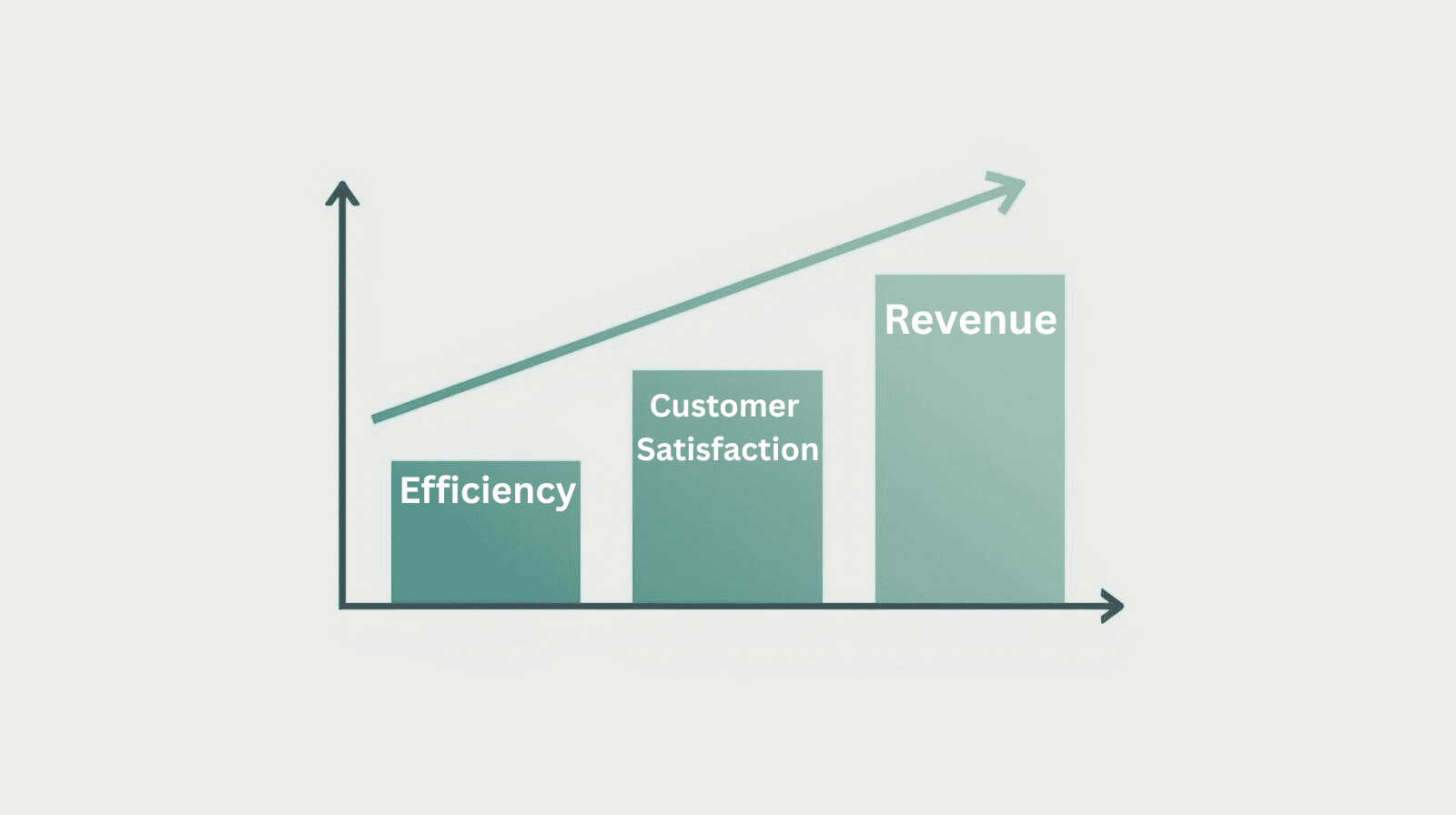
Dealers adopting an AI phone agent automotive solution are seeing measurable gains in revenue, efficiency and customer satisfaction. From higher appointment conversion rates to stronger show percentages, the data proves that AI for automotive doesn’t just answer phones; it protects profit and demonstrates AI’s impact on dealership operations and profitability. Here’s what the numbers reveal:
AI phone call software is transforming how auto dealerships handle customer interactions, especially when it comes to managing high call volumes and ensuring no opportunity slips through the cracks. At the basis of this technology are advanced natural language processing (NLP), machine learning and intelligent automation capabilities. These AI-powered agents can understand and respond to customer inquiries in real time, answer questions and schedule appointments, streamlining dealership communication and freeing up staff to focus on more complex customer needs.
With features like CRM integration, lead qualification and real-time scheduling, AI phone call software ensures that every customer receives prompt, accurate service. This not only improves operational efficiency but also boosts customer satisfaction by reducing wait times and eliminating missed opportunities. By leveraging AI-driven tools, dealerships can reduce costs, deliver consistent customer experiences and gain a competitive advantage in a crowded market. The result is a smarter, more responsive dealership that’s equipped to meet the demands of today’s automotive customers.
Adopting an AI phone agent automotive solution can be transformative for your service department, but success doesn’t come from simply flipping a switch. The dealerships that see the biggest gains, including lower abandonment, higher appointment conversions and stronger show rates, are the ones that approach implementation carefully.
Leveraging AI tools can further support a smooth implementation process by automating complex tasks and ensuring compliance throughout the rollout. It is also crucial to configure AI phone agents to comply with industry safety standards and regulatory requirements, ensuring that all processes meet strict compliance expectations during implementation.
Rolling out AI for automotive requires aligning the AI with your shop’s unique policies, capacity and customer expectations. Done right, it creates a seamless experience where customers can book anytime, your advisors are freed from routine scheduling and your lane runs at peak efficiency. Done poorly, it can lead to scheduling conflicts, misaligned expectations and frustrated staff. To help you avoid those pitfalls, here’s a practical checklist of the key steps every dealer should take to ensure their AI phone agent works smoothly from day one:

To maximize the benefits of AI phone agents in auto dealerships, it’s essential to follow proven best practices that ensure both operational efficiency and exceptional customer experiences. Seamless integration with existing CRM systems and dealership software platforms is crucial for real-time scheduling and accurate service bookings.
AI phone agents should be equipped to handle routine inquiries, lead qualification and appointment management, freeing up staff to focus on complex customer needs. Supporting multiple languages and regional accents ensures accessibility for a diverse customer base, while personalized responses help reduce frustrated customers and foster stronger customer engagement.
By consistently delivering reliable and efficient service, AI phone agents help dealerships reduce costs, improve customer satisfaction and streamline operations. Incorporating predictive analytics into AI phone agents enables dealerships to forecast service needs, detect potential vehicle maintenance issues early and further enhance operational efficiency. Adopting these best practices positions dealerships to stay competitive and responsive in a rapidly evolving automotive industry.
One of the biggest advantages of an AI phone agent automotive solution is how quickly the ROI becomes clear. Unlike many technology upgrades that take months to pay off, AI for automotive call handling delivers immediate, measurable results by reducing call abandonment and converting more bookings into repair orders.
In addition to boosting service lane profitability, AI phone agents also enhance sales service by improving customer interactions and increasing conversions across both sales and after-sales support. To show the potential impact, here’s a simple example based on typical dealership volumes and industry averages:
Not all AI systems are created equal. A generic call bot may work in retail or hospitality, but fixed ops has unique demands that require AI for automotive specifically designed for dealerships. Advanced AI phone agents are powered by machine learning, enabling them to adapt to the specific needs and workflows of each dealership.
To maximize ROI and ensure smooth service lane operations, there are must-have features you should prioritize when evaluating an AI phone agent automotive provider, including:
The best AI phone agent automotive systems integrate seamlessly with dealer software, ensuring real-time booking instead of callbacks or manual data entry. This prevents errors and builds customer confidence. Additionally, integration with dealership systems can enhance supply chain management by providing real-time updates and coordination, helping to optimize production processes and ensure timely vehicle delivery.
Automotive is not like other industries. Service scheduling involves op-codes, labor times, dispatch and technician skill sets. Leading AI for automotive platforms are built with this complexity in mind, ensuring accurate appointments that reflect shop realities. The same advanced AI technologies driving fixed-ops intelligence are also enabling smarter factories in automotive manufacturing, making production facilities more efficient and innovative.
The system should support bilingual interactions, adapt to regional accents and comply with data protection standards. Payment Card Industry (PCI) and personally Identifiable Information (PII) compliance are non-negotiable, especially given the sensitive information customers share over the phone. AI phone agents can support a variety of services, from appointment scheduling to providing information on maintenance and repair options, helping automotive businesses deliver proactive and efficient services to their customers.
Transparency is key. AI-driven analytics provide actionable insights for dealerships, allowing them to track abandonment rates, appointment conversions, and show percentages in real time. The most advanced vendors even benchmark results against industry data, showing exactly how performance compares to peers.
The right AI phone agent automotive enhances — not replaces — your staff. It should allow warm transfers, live monitoring and overrides, so that when a customer requires human empathy or expertise, the handoff is smooth and immediate. Implementing AI phone agents is often part of new initiatives aimed at modernizing dealership operations and improving customer service.
Dealership service lanes are steadily losing share to independents. The main reasons customers give are speed, convenience and cost transparency.
A voicemail greeting or a 10-minute hold time can undo thousands of dollars in marketing spend. By ensuring every call is answered, every customer is scheduled and every interaction is handled professionally, AI phone agent automotive solutions help dealers reverse this trend and defend their fixed ops business.
Revmo is designed specifically for dealerships and service facilities, making it the leading provider of AI for automotive service operations. Unlike generic call center bots, our platform understands dealership scheduling, capacity management and fixed ops business rules.
With Revmo AI, dealers gain true 24/7 coverage, seamless DMS integration and proactive customer engagement through reminders and rescheduling workflows. Our system respects shop-specific rules like op-code timing and transportation eligibility, ensuring that every appointment booked by the AI is one your service lane can actually deliver.
Revmo AI also emphasizes human collaboration. Advisors can monitor calls, step in with warm transfers and review AI transcripts for quality. In an era when fixed ops profitability is under pressure and independents are stealing market share, our leading solution delivers a competitive edge. Ready to drive higher revenue while boosting staff and customer satisfaction? Book a demo with one of our team members today.

Sales Engineer
David Stoll is a Sales Engineer with Revmo AI. With over 6 years of experience in Conversational AI, David is an expert in crafting conversations for brands that engage their users and push revenue forward.
PCI DSS is mandatory in 2026. Here’s what it means for voice AI, what Revmo handles, and what to ask any vendor before you sign.